
The President W&L Needs
The President W&L Needs
Washington and Lee’s next president must possess certain traits to maintain the university’s prestige and traditions, and to avoid repeating recent mistakes.
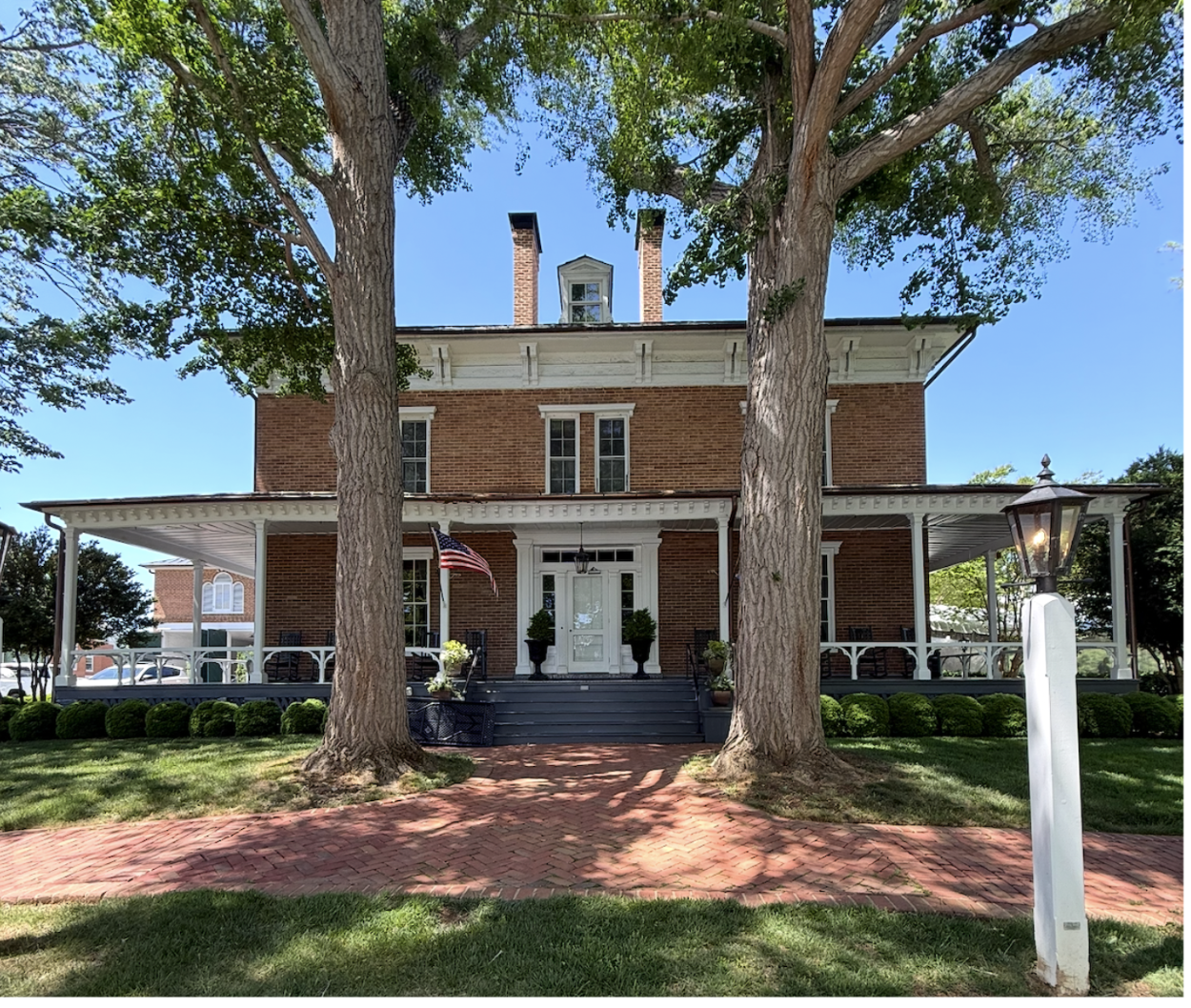
(Lee Chapel, National Historic Landmark, in the winter. | SOURCE: The Spectator)
Washington and Lee University is undertaking a leadership search that could define the university for years to come, and W&L community members cannot trust the administration to put the school’s best interests ahead of its ideological preferences.
Following the announcement of President Dudley’s resignation, the Washington and Lee University administration established the Presidential Search Committee, composed of a student, alumni, faculty and other members of the W&L community, to identify potential candidates.
The Committee has recently published a profile outlining what they are looking for in the next President. The Spectator agrees with most of this profile. However, The Spectator also believes the Committee is omitting essential characteristics that the next President must have.
The Spectator calls on the Presidential Search Committee to ensure that the next President is someone with a prior connection to the university, fairly supports academic freedom and inquiry, and commits to political neutrality.
A common theme in the Committee’s profile is respect for W&L’s history and traditions, which The Spectator wholeheartedly agrees with. The Committee’s emphasis on the next President’s need to “steward the Honor System, the Speaking Tradition, and the norms of open, respectful discourse that define W&L’s community” and “understand and appreciate Washington and Lee’s history” is necessary.
However, it is one thing to say that the next President must respect the university’s history, and another to actually find candidates willing to do so. The Spectator believes that the only person likely to respect the University’s history is someone who has previously been affiliated with W&L. Whether an alumnus, faculty member, or administrator, a connection to W&L is essential.
Someone completely unfamiliar with our University’s history and traditions will be less likely to thrive on campus. We saw this exact pitfall occur when, with less than a year on the job, President Dudley reacted to the 2017 Charlottesville protest as a pretext to set up the Commission on Institutional History and Community, which largely recommended scrubbing W&L’s campus clean of references to former President Robert E. Lee.
The Search Committee has also emphasized that the next President must be able to lead the University’s commitment “to build a modern Institutional History Museum that will present the full context of W&L’s history for the educational benefit of the university community and the general public.” The Spectator, by pure text of this statement, agrees.
However, in practice, “presenting the full context of W&L’s history” can easily be skewed to fit a particular narrative. In leading the effort to curate an Institutional History Museum, the next President has to know what that history looks like or understand the parties to consult in designing the museum.
The Spectator believes that this kind of knowledge cannot simply be explained to someone; it can only be learned by immersion in W&L’s community.
The Spectator maintains the fact that the University has not demonstrated a desire to show “the full context of W&L’s history.” For example, in recent years, the administration has: extralegally “renamed” Lee Chapel, National Historic Landmark, removed over 20 plaques to various figures important to the university’s history, including that to a horse, banished the school’s most valuable art piece to various museums across the country and has slow-rolled the reopening of the museum underneath Lee Chapel for over half a decade (only now reopening a completed, renovated version).
As we laid out in an editorial last fall, the University intentionally obscures its history from prospective students, probably out of embarrassment about the way some people feel when forced to engage in a nuanced discussion of America’s historical triumphs and tragedies.
Thus, The Spectator calls on the Presidential Search Committee to add previous University affiliation to the Presidential Profile. Only a member of the W&L community can understand and implement the strategies needed to preserve and faithfully represent the university’s history, and to set students up to learn lessons from it, rather than merely shield their eyes from anything involving the namesakes.
From an academic standpoint, the Search Committee wants the next President to strengthen the Law School’s national profile, to support STEM programs and facilities and “to expand its reach to talented students from all backgrounds and sustain a welcoming community in which they can live and learn together.” The Spectator agrees with these principles and hopes the next President can strengthen W&L’s academics, given the university’s recent fluctuations in academic rankings.
Another significant component of the presidential profile that The Spectator would like to highlight is that the Committee wants the next President “to elevate W&L’s remarkable position, national profile, and trajectory of success” by “championing the University’s commitment to freedom of expression, academic freedom and intellectual inquiry.” The Spectator wholeheartedly agrees that the next President should support intellectual inquiry and academic freedom. This goal aligns with our core mission as a newsmagazine.
That said, it is one thing to solicit a President who claims to support these principles and another to find one who actually commits to them. Intellectual inquiry and academic freedom entail viewpoint diversity and the provision of a space where views on both sides of the political spectrum are tolerated and respected. W&L has struggled with this in recent years, evidenced by its precipitous drop in FIRE Free Speech rankings.
Recent troubling events include W&L College Republicans being rebuked by an administrator for their support of Glenn Youngkin’s 2021 gubernatorial campaign. Likewise, a petition to bar conservative speaker Matt Walsh from speaking at W&L received over 600 signatures from students, faculty, staff, and alumni.
Though President Dudley reluctantly supported free speech by allowing Walsh to speak, these events indicate that W&L has much work to do to cultivate a community that respects all viewpoints.
Thus, The Spectator calls on the Presidential Search Committee to find a president who is not only willing to support academic freedom but also committed to providing an open space for all viewpoints. This is particularly needed for W&L’s conservative voices, who have recently faced many more obstacles in expressing their views than their liberal counterparts.
The Spectator also calls on the Presidential Search Committee to ensure that the next President remains politically neutral on national issues. In this area, President Dudley failed considerably, selectively weighing in on political issues.
He condemned President Trump’s travel ban, the 2017 Charlottesville violence, George Floyd’s murder and the Supreme Court’s decision in SFFA v. Harvard, while refusing to condemn the murder of Charlie Kirk.
The Spectator had no issue with President Dudley condemning the aforementioned issues; in fact, some of them were legitimate and needed to be addressed. However, it is unacceptable to comment on the first four events and refuse to use the Presidential bully pulpit to condemn the assassination of Charlie Kirk.
The next President of W&L, in supporting academic freedom, must also be politically neutral. It is unacceptable if the next President, like President Dudley, comments primarily on liberal-leaning issues while ignoring the concerns of W&L’s conservatives.
The Spectator requests that the Presidential Search Committee add commitment to “political neutrality” as a part of the presidential profile.
Only when the University’s top administrator commits to and exemplifies political neutrality can Washington and Lee truly thrive as the robust liberal arts institution it proclaims itself to be, fostering intellectual inquiry and free academic expression.
