
Catherine Herridge Speaks on Press Freedom and Integrity
Catherine Herridge Speaks on Press Freedom and Integrity
In the face of challenges to First Amendment rights, Herridge argues that independent journalists may carry the torch for the future of press freedom.
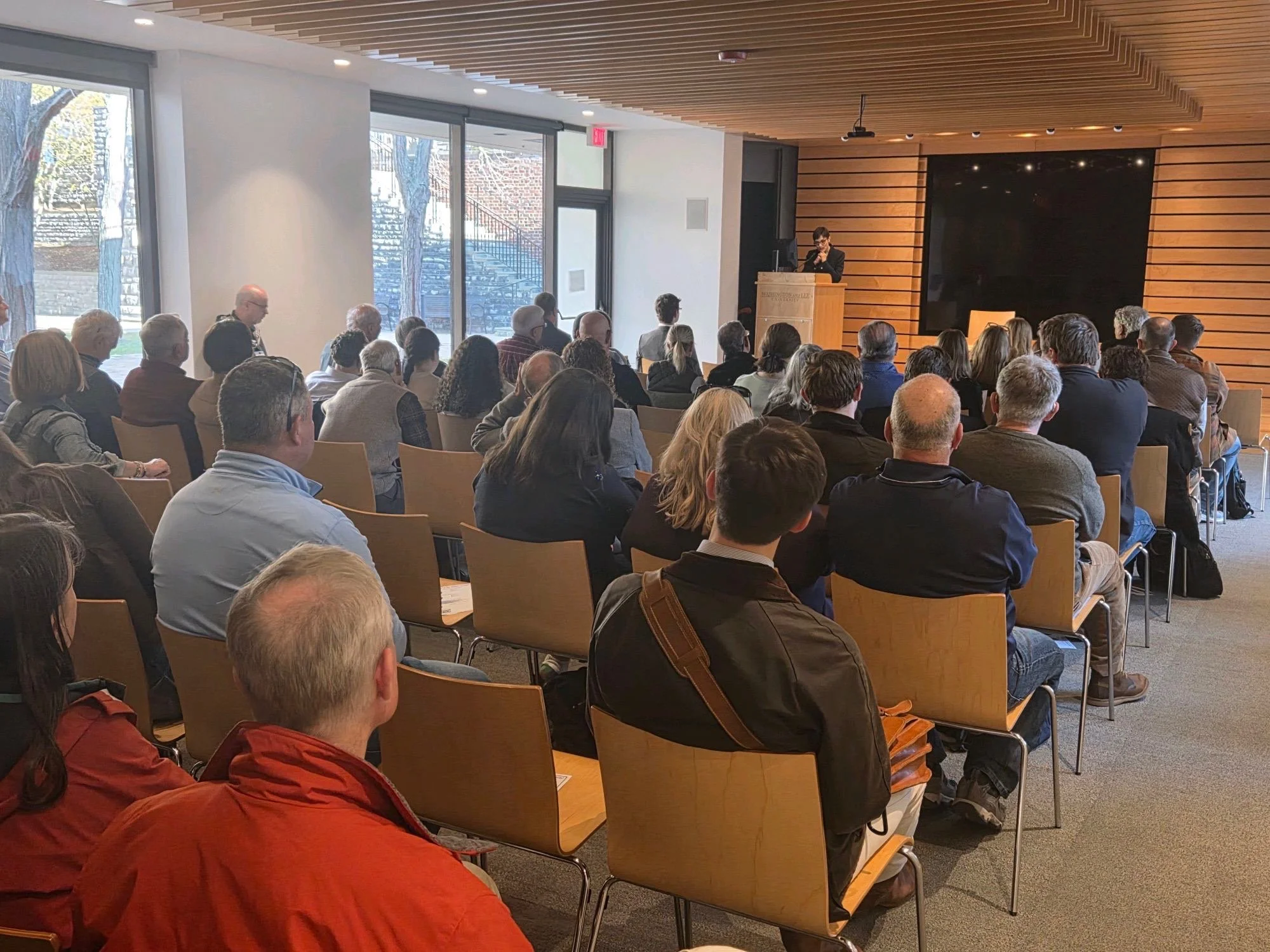
(Herridge speaks in front of a crowded Northern Auditorium. | SOURCE: Alex Kagan)
Independent investigative journalist Catherine Herridge addressed a Northen Auditorium packed with students, parents and faculty on October 24. [https://tinyurl.com/HerridgeEvent To watch the recorded livestream.]
Herridge, who has a reputation as one of the nation’s top investigative journalists following her work at CBS News, was invited by The Spectator for Students and Family Weekend. Her talk, followed by a question-and-answer session, focused on the qualities of exceptional journalists and the importance of fighting to preserve First Amendment rights.
While introducing her, The Spectator’s Business Manager James Eustis, ‘27, noted Herridge’s recent legal battle, which has drawn a great deal of media attention. In February of 2024, Herridge was held in civil contempt for refusing to reveal confidential sources behind a 2017 Fox News story focusing on the ties of a Chinese American scientist to the Chinese military. In September 2025, the District of Columbia (DC) Circuit Court upheld the ruling. The Freedom of Press Association referred to the decision as a “significant blow to the press freedom of all journalists.”
Following Eustis’ introduction, Herridge entered the crowded auditorium and, referencing her recent time of arrival, quipped that “there is no better beginning to a great story than a hot landing.”
Herridge reflected on her years at Harvard University and the Columbia Journalism School, citing the influence of one of her most formative mentors, Columbia journalism Professor Richard Blood. His teachings, she explained, shaped her reporting career. Among his guiding principles was the idea that “if you can’t explain a story in a headline of eight words or less, you need to do more reporting.” It is a standard that Herridge said she still holds herself to. Throughout her talk, she continually emphasized Blood’s lessons as a framework for good journalism.
Herridge soon pivoted to the main message of her talk: the declining state of modern journalism. Herridge claimed that a combination of new technology and a loss of public trust in the media is causing corporate media to undergo a “dinosaur-like extinction.” Promoting a journalistic examination of this trend, Herridge recommended that the audience examine this claim through a few case studies.
Herridge used the 2024 presidential election to show how sharply media influence has shifted. She pointed out the irony that Donald Trump could skip appearing on 60 Minutes, once a dominant force in journalism, and still win the election. Meanwhile, when Kamala Harris appeared on the same program, the dominant media narrative questioned whether CBS edited her footage to make her look more polished.
The data highlights the change: Harris’s interview drew a mere six million views, while clips accusing it of being fake reached 28 million. Trump’s interview with Joe Rogan drew 60 million views, reflecting the stark changes in American media consumption.
Truth, Herridge explained, has remained the foundation of her work, evident in her full-transcript interview with President Trump during his first administration, and her live-taped conversation with Secretary of State Marco Rubio, engineered specifically so viewers could see every exchange without selective editing.
That same commitment to transparency partially drove her decision to step away from legacy media after being laid off by CBS, after which she began working independently. CBS’s handling of her termination left a bad taste in Herridge’s mouth, as the network had her reporting records seized, in a moment that shocked her.
The perks of independent journalism, Herridge noted, went even further. “I’m going to tell the stories I couldn’t tell before.” Using this newfound independence, she has focused on work that amplifies less-discussed issues, from whistleblower reports to COVID-19 vaccine coverage. The gratitude shown by the Department of Homeland Security whistleblowers she interviewed, who were mistreated by both mainstream media and the federal government after speaking out against alleged noncompliance with a DNA collection law, shows how real the gaps in coverage have become.
Herridge closed her talk by warning that the core threat facing corporate media is the collapse of public trust. Citing a recent Gallup survey, she noted that only 28% of Americans express even “fair” trust in major news outlets, with confidence among Republican voters at just 8%.
She pointed to the coverage of the Hillary Clinton email investigation as a representative failure, arguing that several outlets characterized the documents as “retroactively classified” without thoroughly examining the underlying facts. In her view, this example demonstrates how reporting can suffer when journalists frame a narrative rather than critically interrogating it.
Herridge also addressed her ongoing legal battle involving demands for her confidential reporting materials. She emphasized that she is a witness — not a defendant — and that the litigation centers on efforts to compel her to reveal protected sources. “I am the strongest advocate for the First Amendment and a free press and the protection of confidential sources,” she said.
She reiterated that position in testimony before Congress, where she stated that when “the network of Walter Cronkite steals your investigative reporting files, it is an attack on investigative journalism.”
Amid concerns that corporate media may be suppressing investigative reporting, Herridge argues that independent journalists like herself play a crucial role in safeguarding press freedom.