
The Looming Imperial Democrat
The Looming Imperial Democrat
President Trump’s power grabs are creating a Republican nightmare.
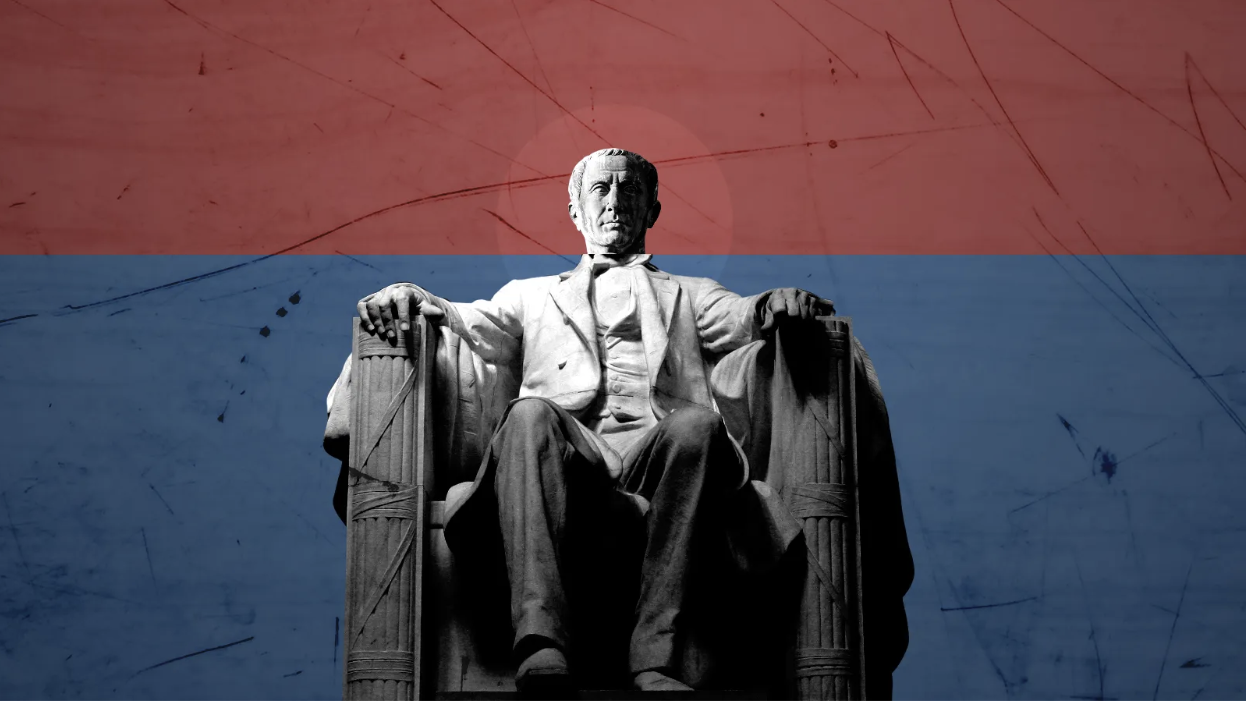
(A future imperial president reigns above the law | SOURCE: The Week)
President Donald Trump’s precedent-defying actions hand more power to a future imperial left-wing president. His continued expansion of the executive branch’s power, combined with the Democratic Party’s drift towards socialism and its increasingly likely future electoral victories, has created the conditions for the left to successfully embrace a more centralized and aggressive style of governance.
Perhaps the most common word, across party lines, used to describe Trump’s second term has been “unprecedented.” At a cursory glance, this accusation may appear wholeheartedly justified.
He declared more national emergencies in his first 100 days than most modern presidents have in four-year terms, threatening to usurp Congress’s enumerated powers by declaring issues of everyday governance emergencies. He has fired independent inspectors and completely overridden the long-standing precedent of a non-partisan attorney general.
Trump has seized control of the purse from Congress and attempted to rewrite the curriculum of private universities. From deploying the National Guard without the consent of state jurisdictions to combating scientific authorities on medical issues that have been settled for decades, it is no shock that “unprecedented” is so often associated with this Presidential term.
Yet, despite its seeming fit, using this term is a vast oversimplification. For nearly all of the administration’s actions listed above, and more, that are routinely decried as unprecedented, Trump’s lawyers and supporters have cited precedents.
For example, presidents have routinely declared national emergencies regarding issues Congress could address, just as President Trump has. In 1998, President Clinton declared a national emergency in response to Colombian drug cartels that were using American companies to launder money.
President George W. Bush fired seven U.S. attorneys for political reasons, again, similar to Trump’s meddling in the Department of Justice. Finally, President Eisenhower deployed National Guard troops to Little Rock to enforce desegregation, similar to how Trump has sent troops into blue states against the will of various governors. Given these and other examples, it is far from accurate to call Trump’s actions wholly legally or politically unprecedented.
However, some of Trump’s supporters go too far in the opposite direction, claiming that his aggressive actions are essentially identical to those of previous administrations. This perspective is also incorrect.
First, Trump’s supporters assume that the intensity and scope of the consequences of his policies are irrelevant to whether they align with precedent. For example, his unilateral and consistent strikes on Venezuelan drug traffickers are not without legal precedent. President Obama justified the extrajudicial killing of an American citizen using surprisingly similar rhetoric.
Yet, consider a hypothetical. Imagine if a Republican president ordered a drone strike on a sitting Democratic congressman while they were abroad, claiming they were a threat to national security. It would be ridiculous to argue that this aligns with the precedent set by Obama.
This outrageous scenario demonstrates the frailty of his supporters’ argument that legal precedent is all that matters. While both technically possess the same legal logic that the President can strike those abroad he deems threaten national security, the consequences and context cannot be ignored.
Similarly, Trump destroying at least 80 boats and ending the lives of at least 238 “narco-terrorists” cannot be downplayed by citing Obama’s actions.
Second, unlike his predecessors, Trump publicly flaunts his actions, whereas previous administrations downplayed their scope and tried to expand the Executive Branch’s power more subtly. For example, when George W. Bush attempted to exert his authority over the Department of Justice (DOJ), he secretly concealed his true intentions. Trump, however, has openly asserted that the DOJ should be subject to his every whim.
Finally, the electorate believes he is seizing an unprecedented amount of power. Nearly seven out of every 10 Americans think Trump is exercising more power than previous presidents.
The Overton Window is a concept political scientists use to describe the range of beliefs and policies the public considers acceptable. The Window often does not align with legal minutiae.
The public often does not care about decades-old statutory precedent when deciding which ideas are worth considering. Citing obscure or arcane historical examples to argue that Trump’s policies will not set radically different precedents is silly. If the public perceives something as unprecedented, then, functionally, it is.

(Two leopards lounge outside of a temple | SOURCE: Briton Riviére)
Furthermore, the danger is emphasized by “The Leopards Break into the Temple,” a famous parable written by Franz Kafka. He writes, “Leopards break into the temple and drink the sacrificial chalices dry; this occurs repeatedly, again and again: finally it can be reckoned upon beforehand and becomes part of the ceremony.”
This is how new precedents are created. It is clear that Trump is not the only culprit; he’s not the only leopard in the temple.
Presidents from both parties are responsible for having overstepped the Executive Branch’s bounds. But Trump is cementing new rituals faster and more dramatically. Every time he breaks into the temple, he grants future Democratic presidents a new, powerful set of tools to a party that is likely to become far more radical.
A litany of data shows that Democratic voters, and the electorate as a whole, are moving toward socialism. 53% of Democratic voters prefer candidates similar to Bernie Sanders, Alexandria Ocasio-Cortez or Zohran Mamdani. Only 33% prefer more moderate figures like Hakeem Jeffries, Nancy Pelosi or Chuck Schumer.
A common retort is that the data reflects a charisma bias. Sanders and Mamdani are simply more likable than the dry, old, and generally disliked Pelosi and Schumer. This may be true, but when the charisma factor is excluded, the data says otherwise. Around two-thirds of Democrats have a “positive view” of socialism, while a shockingly low 42% view capitalism favorably.
Support for capitalism has fallen among the electorate. Only 54% of Americans view capitalism favorably. Socialist candidates consistently rank among the most popular politicians on the national scene. Recent waves of progressive, and socialist-aligned candidates toppling Democratic incumbents in Democratic primaries in Colorado and New York this past summer exemplify this trend.
These facts should neither be surprising nor disputed. After all, Sanders came quite close to winning the Democratic nomination nearly 10 years ago. The primary was close enough that many of his supporters, even Trump himself, claimed the party establishment rigged it.
One possible rebuttal would be that Democrats are so unpopular as to be incapable of winning the White House and seizing the greater executive power that Trump is creating. The Democrats are quite unpopular, but so are Trump and his party.
Since taking office, Trump’s approval rating has plummeted, particularly on his handling of the economy. Many commentators have argued he will face the same issues Biden faced late in his term, including affordability, economic challenges, and even his own cognitive decline.
Additionally, Democrats netted shocking margins in last November’s elections, despite their rampant unpopularity. They swept the state and local-level elections and referendums in Virginia, New Jersey, California, New York and Pennsylvania. The common Republican talking point that “blue states and blue cities voted blue” is a poor attempt to sweep the inconvenient facts under the rug. Democratic nominee Abigail Spanberger won 59% of independents in the Virginia gubernatorial race.
Every single county in the state moved left compared to the 2024 margins, some by double digits. Democrat Mikie Sherrill flipped two majority-Latino New Jersey counties blue that Trump won in 2024, showing that Latinos, those voters who were so essential to Republican victories in 2024, will not consistently vote red, especially when they are living in a culture of fear.
Both moderate and progressive Democrats netted victories in November, giving them both a claim to the mantle of the party going forward. But given the base’s drift to the economic and political left, the most effective candidate in 2028 is speculated to be socialist-adjacent. Even more worryingly for Republicans, going into this year’s midterm elections, Democrats seem poised to regain the House and possibly even the Senate, despite the GOP’s mid-decade redistricting strategy.
The combination of all these factors, a growing centralized executive, a Democratic drift to the left, and their ability to win despite horrific unpopularity, creates a window in the near future for the political left to have their own populist revolution, much like the Republicans had almost 10 years ago.
But also with the ability to undo nearly everything Trump has enacted and bully private and public institutions into submission, in the inverse fashion of their predecessor. This is especially likely because most of Trump’s policies were enacted through executive orders, not legislation, which is more enduring.
Just imagine the scenario outlined by Isaac Saul, where a future president declares a national emergency to counter pro-life protestors. Claiming abortion bans and, therefore, pro-life advocacy lead to an increased rate of maternal mortality, the president labels the organizers of the March for Life as “terrorists,” shuts down the march using riot police and tear gas, and orders the National Guard to guard Planned Parenthood clinics administering abortions.
Are these actions morally equivalent to what Trump is doing? Of course not. Not even close. But all of the above would be completely legal under the precedents Trump is setting.
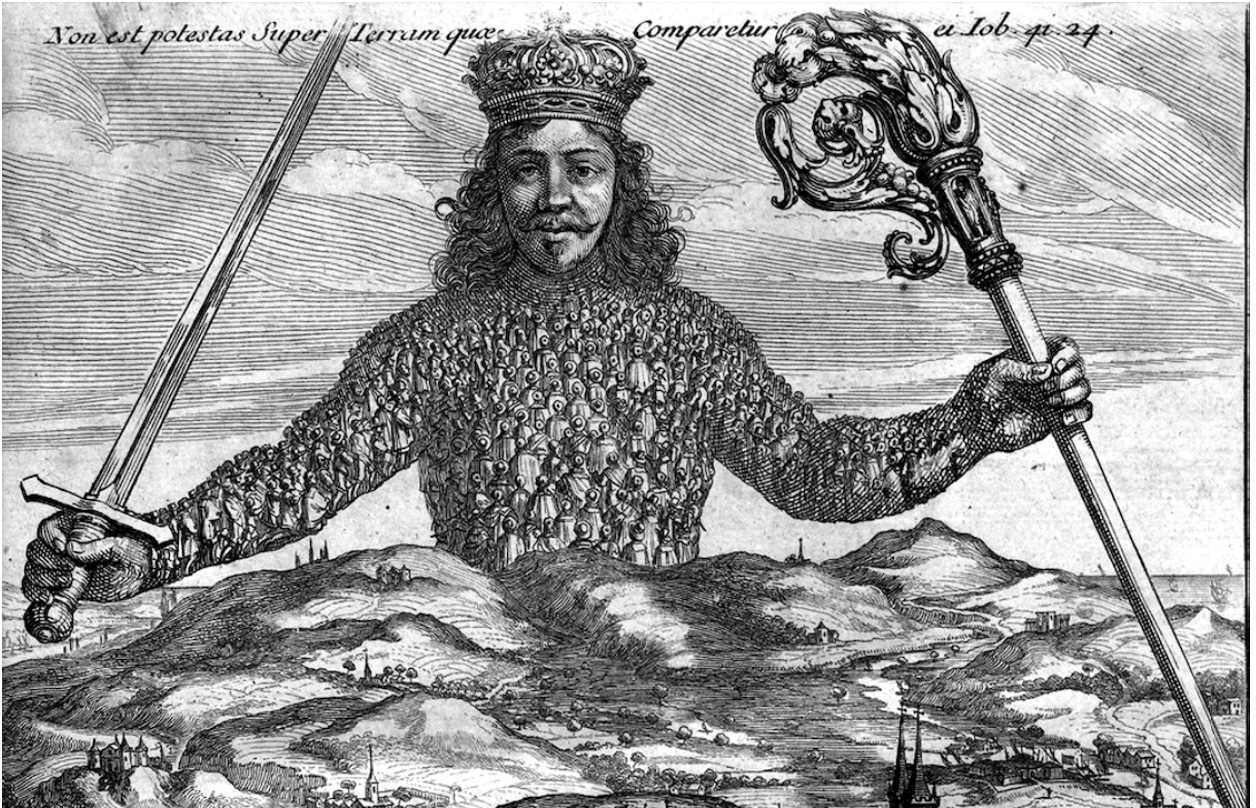
(The centralized, all-powerful sovereign Thomas Hobbes advocated for. | SOURCE: Abraham Bosse)

If neither party decides to take a step back, and executive power continues to expand, we will spiral toward a singularity. A sovereign with completely centralized power. Only one side can win, as there can be only one absolute authority. And given how perfectly cleaved down the middle America is, it’s a 50/50 shot whose side prevails.
Should we really be willing to risk absolute power being in the hands of a diametrically opposed demagogue just so that we could have a coin flip of a chance of having everything our political tribe wants? Some might say yes. But others consider the other side to be so dangerous that it is not worth the risk.
Those who say yes should consider the consequences. Politics is fundamentally about compromise. Because no two human beings agree on everything, they must, therefore, compromise to some extent. And when compromise ceases, Charlie Kirk puts it best what happens after that.
In the short term, though, Trump’s legacy may be completely overridden because of his own doing, for those who live by executive fiat die by executive fiat.
The opinions expressed in this magazine are the authors’ own and do not reflect the official policy or position of The Spectator, or any students or other contributors associated with the magazine. It is the intention of The Spectator to promote student thought and civil discourse, and it is our hope to maintain that civility in all discussions.